Monday, April 9, 2012

Mayo

I have been busy working a few sites in County Mayo over the last few weeks and have not had much of a chance to update the blog (as Floss keeps reminding me).  While in Mayo I come across loads of Crossbills on a daily basis in spruce and lodgepole pine plantations and a few other nice odds and ends.

 I come across Crossbills every day like these males © John N Murphy
Siskins are nesting in many Mayo plantations © John N Murphy
 Coal Tits are plentiful in the spruce plantations of North Mayo © John N Murphy
 Skylarks are back on their territories © John N Murphy
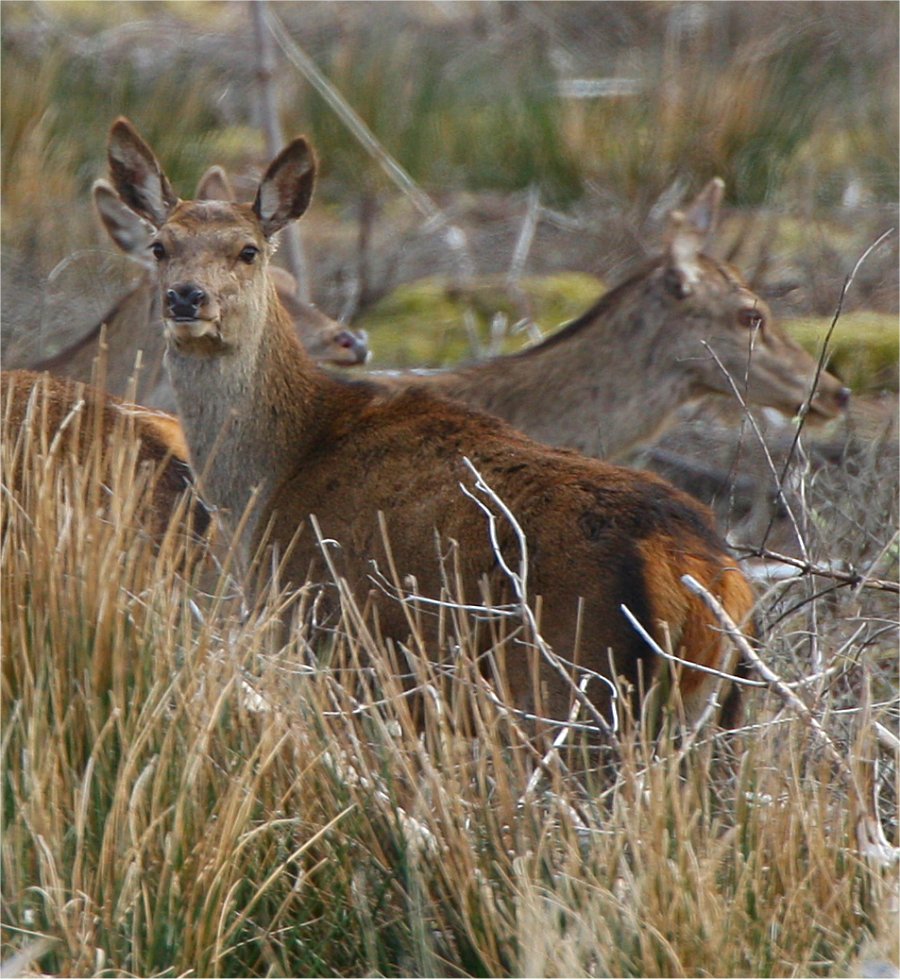
A small herd of Red Deer, North Mayo © John N Murphy

Thursday, March 15, 2012

Seabirds Return

My first weekend back in Ireland after the trip to Costa Rica on the 22nd February, I managed to get back west to Loop Head where all the seabirds had returned to the cliffs and were taking up breeding positions already.  This is much earlier than usual.


 Lines of nesting auks at Loop Head © John N Murphy
Guillemots on the sea © John N Murphy

Tuesday, March 13, 2012

Central Park

On our way home from Costa Rica we had an overnight stay at Newark, New Jersey. So I got a chance to visit Central Park for a couple of hours to do a bit of birding.  There were fewer birds during my visit this time than I have seen in past trips to this fantastic location in the middle of Manhattan Island.  I would have loved to have had enough time to get out to Jamaca Bay, as I have done in previous visits to the Big Apple.  Below are some shots from this trip and previous visits to the park.

 American Robin © John N Murphy
 Black-capped Chickadee © John N Murphy
 Hooded Merganser drake © John N Murphy
Bufflehead female © John N Murphy
Common Grackle © John N Murphy
Common Grackle with a damaged upper mandible © John N Murphy

Saturday, March 10, 2012

White-faced Coati & Others

There were many reptiles and other mammals that we came across on our trip to Costa Rica.

 White-faced Coati © John N Murphy
 Jesus Christ Lizard © John N Murphy
 White Bats roosting under a banana leaf © John N Murphy
 Green Lizard © John N Murphy
 Variegated Squirrel © John N Murphy
 Stick Insect (head to the right, tail to the left) © John N Murphy
 Ctenosaur Lizard © John N Murphy
Orb Weaver Spider © John N Murphy

Wednesday, March 7, 2012

White-throated Magpie Jay

The White-throated Magpie Jay is similar in size to our European Magpie. They have a wide range that stretches from Mexico to Costa Rica.  It is gregarious and often travels in flocks of 5 – 10 birds. They are noisy birds that will mob their observers.

The White-throated Magpie-Jay has an average length of 20 inches, with its long tail accounting for about half that length.  Its upperparts, including the wings and much of its tail, are blue/blue-grayish in color.  The underparts are white, as are the sides of its head.  There is a black band running across its breast and halfway up each side of the neck.   It has a stout bill and black legs and feet.  The males and females are alike in appearance.

White-throated Magpie Jays © John N Murphy

Tuesday, March 6, 2012

Arenal Volcano


Our last port of call in Costa Rica was Arenal, the Volcano and Observation Lodge. At 5,437 feet, the Arenal Volcano looms large and ominous over the pastured green hillsides that surround its base. Although currently in a resting phase, Arenal remained the country’s most active volcano for the past 43 years. Its storied history is charged with eruptions – both major and minor – that have intimately affected the region and the people who live here.


 Bananaquit © John N Murphy
 Palm Tanager © John N Murphy
 Red-legged Honeycreeper male with female in the background © John N Murphy
 Crested Guan © John N Murphy
 Buff-throated Saltator © John N Murphy
 Faciated Tiger Heron © John N Murphy
 Dusky-capped Flycatcher © John N Murphy
 Tropical Pewee© John N Murphy
 Shinny Cowbird © John N Murphy
Black Phoebe © John N Murphy

Monkeys

During our visit to Costa Rica we encounter three different Monkey species. The scientific name of the white faced monkey found throughout Costa Rica is Cabus capucinus. It is also called as the white throated monkey or alternatively, the capuchin monkey. This capuchin monkey is considered to be the most intelligent among the New World Monkeys. 

Essentially native to Central and South America, the White-faced Monkeys have small slender bodies covered in fur, which is either black or brown. They are found in most of the countries National Parks (Santa Rosa National Park and Manuel Antonio National Park) and reserves (such as the Cabo Blanco Reserve) in Costa Rica.

White-faced or Capuchin Monkeys © John N Murphy


Howler Monkeys are some of Costa Rica's loudest inhabitants. It is said that the call of a howler monkey can be heard for 3-4 miles away, even through the thick tropical forest. Howlers live in small groups of about 12 individuals. Scientists believe that the dominant male of the group uses his loud voice to keep the group spaced out enough so they don't have to compete for food.
 Howler Monkey's this one has a baby on board © John N Murphy